I thought I’d try to do something a little different…
Here are the flowers that sprouted up this April. I’ve been wanting to do this for awhile to organize in my own mind what will sprout up when. I’m quite sure I did not get them all but this is what I did get. May will have to be done in installments as any flower hunter will probably tell you.
It seems the first flowers are yellow or white they started around the end of march actually I captured them on the 6th of April, buttercups (not shown), followed by yellow-bells and the woodland star. Around the 9th the spring beauties and Draba was added. It was 17th when the shooting stars and blue-eye’d Mary’s bloomed. On the 20th the very pretty wool breeches showed up alongside the Siberian springbeauty. This year, unlike the last three, there is an abundance of wool breeches. That makes my eyes happy!

Draba verna, spring draba or spring whitlow-grass

Claytonia lanceolata or Lanceleaf Springbeauty

unknown I suspect it’s in the springbeauty family (or Claytonia)

Lithophragma glabrum, bulbous woodland-star or bulbiferous prairie-star

Fritillaria pudica, yellow fritillary, yellow bells or yellow missionbells

Collinsia parviflora, small-flowered blue-eyed mary or maiden blue eyed Mary

Phlox gracilis or slender phlox

Though this is a later shot they were in full bloom on the 17th I suspect this, based on the thick rounded basal leaves, is Dodecatheon conjugens or the Bonneville shooting star. {sometimes also called; slimpod shooting star or desert shooting star}

Hydrophyllum capitatum, ballhead waterleaf or wool breeches

Claytonia sibirica or Siberian springbeauty… I’m not 100% solid on this ID but I’m pretty sure.

Unknown Flower

And suprizingly I saw my first pioneer violet on the 20th. Viola glabella

Arrowleaf Balsamroot just started to sprout petals on the 17th & on the 1st of May were in full bloom.
Okay I think that covers it… It’s been raining for days now which means I’m stuck inside. Though I love the powerful and dramatic thunderstorms I still think I adore looking for the flowers more.
Filed under: Uncategorized | 8 Comments
Tags: Arrowleaf Balsamroot, ballhead waterleaf, Bisbee Mountain, Bonneville shooting star, bulbiferous prairie-star, bulbous woodland star, Claytonia lanceolata, Claytonia sibirica, Collinsia parviflora, Dodecatheon conjugens, Draba verna, eastern washington wildflowers, Fritillaria pudica, hydrophyllum capitatum, Kettle Falls, Kettle Falls Washington, Lanceleaf Springbeauty, Lithophragma glabrum, Local Wildflowers, maiden blue eyed Mary, Orient Washington, Phlox gracilis, pioneer violet, Siberian springbeauty, slender phlox, Small-flowered blue-eyed Mary, spring draba, Spring Whitlow-grass, Viola glabella, Washington, Washington State, wildflower, Wildflowers, wool breeches, yellow bells, yellow fritillary, yellow missionbells
Thought I’d toss up a couple shots of our most recent guests.
male & female calliope hummingbirds (Stellula calliope)


Black-Chinned Hummingbird (Archilochus alexandri)

To all good Mom’s out there Happy Mother’s Day!
Footnote: I’d like to say upfront I did not handle any of the birds here nor did I photo-shop – I just fed them. If any photographer would like to see my, not so elegant, set up just drop me a note, I’d be happy to show them.
Filed under: Bird Watching, Local Birds, Pacific Northwest, Photograhy, Uncategorized | 2 Comments
Tags: Archilochus alexandri, Black-chinned hummingbird, calliope hummingbird, calliope hummingbirds, female calliope hummingbird, Stellula calliope
A Chickadee vs. Clean Glass
Okay quick and true story….. I’ll subtitle it; “The Rural Conundrum: Clean Windows to See the Neat View or Dirty Windows to Prolong the Life of Wild Birds?”
Yep, I heard that light thunk near my kitchen window and just knew a bird had slammed into it. With all the bird food I put out I wonder how much bad karma I’ve build up because I’m obsessed with really clean windows. Maybe I’ll come back as a gnat and some swallow will get even for my deep set need for cleaning glass so often…
On a Monday evening I ran outside to find a black-capped chickadee (Poecile atricapillus) sitting dizzy on the porch. The dogs and the cats think one thing when this happens, “ummmm mid-day snack!” I know this because I have to race to the bird before any of them show up. My black kitty actually is quite the hunter..
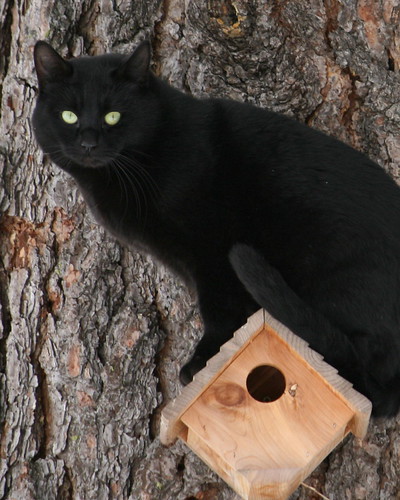
{luckily that was shot in Jan and the bird apartment was unoccupied…}
So my husband, at my insistence, scooped up the bird. (After all I cannot photograph and hold too…)

Joe gently held him until his confused head cleared up enough to fly away. He said he loved it because he could feel the bird treat his fingers like a branch and curled his little feet around his forefinger.

you can see in his profile even his head feathers were a little mussed up…. poor thing.
You’d think they’d hold a grudge but no, the next day I got really close to one of them. I totally cheated I was wearing a ghillie suit while getting closer. The first time I wore it I was sitting outside and almost gave my little girl a heart attack when she saw “the bush move!”


Okay enough of me and yes, the bird lived and flew off just fine.
Overall Score?
Clean Glass: 0
Chickadee: 1
Filed under: Bird Watching, Local Birds, Pacific Northwest, Photograhy, Uncategorized | 7 Comments
Tags: Bird Watching, Birds, black-capped chickadee, Kettle Falls, Kettle Falls Washington, orient, poecile atricapillus, Rural
mini spring post
A few “in the field” macro shots of various things..
At the moment I’m not as good as identifying algae and fungi so I’ll leave the titles out. I’d embarrass myself making a feeble attempt. Anyone who knows names and wants to ID these guys. I’ll happily rewrite this and post it for all to see.
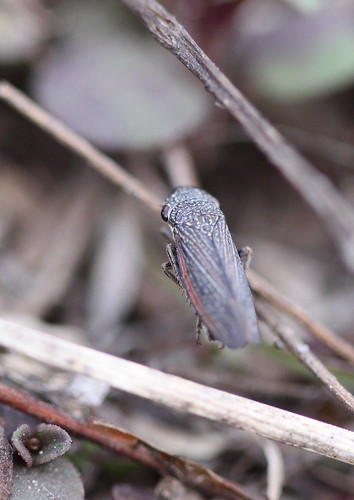
the first insect I saw this spring

the first bit of grass (with a touch of moss intertwined)

the first stonecrop… or the first unidentified tiny plant of spring? either way exciting!

the first unopened buttercup

and then the first opened buttercup. One cool factoid: buttercups are very poisonous so much so that some Indian tribes made a concoction seeped with buttercups and dipped their arrow tips in it to make a shot more lethal.
…other flowers have opened since and I’ll toss those up real soon. I drove down to Boise to visit The Peregrine Fund; The World Center for Birds of Prey. I’ll shoot up a post on that once I go through my shots. Meanwhile, I hope all is enjoying spring!
Filed under: Local Wildflowers, Pacific Northwest, The Environment, Uncategorized | 5 Comments
Tags: Bisbee Mountain, Environment, Kettle Falls, Kettle Falls Washington, Nature, Orient Washington, Ranunculus eschscholtzii, Rural, Snow Buttercup
testing the new lens…
this spring I intend to walk through the forest and attempt to utilize my new lens… i will say nothing but shoot up a couple of shots I liked. I felt obligated to test it before I could start taking shots of local flora….


the most recent birds will come but for now I’m just trying this macro lens out for spring…
again I’m sorry for any delays but I’ve updated a lot of my equipment and I’m learning it. These are not wildflowers just me playing around with a bunch that my fabulous hubby gave me.
hugs, Lori
Filed under: Pacific Northwest, Photograhy, Uncategorized | 12 Comments
Tags: flowers, macro, photography

Pine Siskin’s

Hairy Woodpecker


Here is a little Mountain Chickadee I met up with last night (I like that ruffled feather look…)
Filed under: Bird Watching, Local Birds, Pacific Northwest, The Environment | 5 Comments
Tags: Bisbee Mountain, Hairy Woodpecker, Kettle Falls, Kettle Falls Washington, Local Birds, mountain chickadee, Nature, Orient Washington, Pine Siskin, Washington State
I did not need the reminder that spring was six weeks away…. I found that even when Phil states that we are having an early spring it has no bearing on my life; the dramatic claim does little in terms of thawing ice and snow …. at this point I just sing Christmas carols to dampen any dreams of the premature warmth. Winter Wonderland is the song of the week.

as you can see; there is still lots of snow on the ground…
So I focused on the birds; the male downy woodpecker (Picoides pubescens) who allowed me a bit closer today.

I felt better about that after the last shot I posted of him …. which never did the handsome fella justice…

Meanwhile, the birds that visited me all winter long also put on a bit of a show…
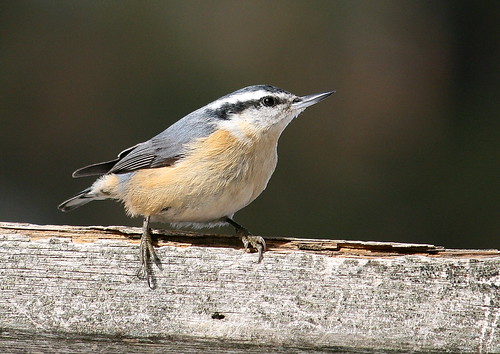
Here was a redbreasted nuthatch (Sitta canadensis) who I’ve put out food for all winter.
And then of course the female downy (Picoides pubescens) showed up – not to be outdone by the male….

She really seems to enjoy the suet..

and I love watching a woodpecker’s tail working up a tree …or in this case on the underside of the feeder.
In the last couple of days I did end up seeing a lifer; the common goldeneye (Bucephala clangula) (this is a distant shot but I’m sure I called the species correctly…)

In the next couple of day’s I’ll try to honor the few birds that don’t fly away the minute the weather gets cold! Like this little lady dark eye’d junco (Junco hyemalis) who ate faithfully at my feeder all winter long. I took this shot in the middle of January.

I guess, in my opinion to have faith to make it… means just about everything. They inspire me to believe that tho the temps are cold, the snow is thick and the frost is hard nothing will stop spring, nor will a semi-popular rodent bring it. Like all good things; it comes in it’s own sweet time.
Filed under: Bird Watching, Local Birds, Local Wildlife, Pacific Northwest, The Environment, Uncategorized | 4 Comments
Tags: Bucephala clangula, Common Goldeneye, Dark Eye'd Junco, Downy Woodpecker, Junco hyemalis, Picoides pubescens, Red-breasted Nuthatch, Sitta canadensis
Let’s talk birds… I kept putting out seeds and in December, when six feet of snow fell and the temps dropped to six below, I felt pretty happy I did. The chickadee’s, red-breasted nuthatches and a few dark eye’d juncos fed, then “slept,” then fed, then “slept” and well, you get the basic idea. (That also seems to be my winter hibernation pattern as well….) I put slept in quotes because it is not a very scientific way of talking about what they do but as humans we can relate to that much better then the term: Thermoregulation.
So, all the really noisy and aggressive birds flew away and allowed me new sightings. My world became hushed under a thick layer of snow which made the drumming of woodpeckers that much more evident – what a neat new trick nature played! There was a male pileated that harassed us a bit but the new guys I had not noticed before were the Downy woodpecker and it’s almost identical twin the Hairy woodpecker. Great… how to tell them apart was the new question of the day….
Let’s go by sexes;

This is a female Hairy Woodpecker (Picoides villosus.) According to birdweb there are three variations of the hairy in Washington state alone. The ones found in Kettle range, not suprizingly, are more closely related to the rocky mountain hairies. You cannot determine a hairy by it’s feathers because there are fifteen subspecies as you travel across the United States. Instead they are distinguished by their size, which is typically larger in Northern states and by the length of bills. Compare the downy below to the beak size of this one. The Eastern Washington subspecies, like your rocky version, are distinguished by how much more black then they are white – the birds have fewer white spots and more black feathers and tend to look more “grayish” on the chest then ones in other parts of the United States.

So by contrast here is the female Downy Woodpecker (Picoides pubescens.) Typically they are just about the size of a sparrow and have tiny beaks. These little beaks make them the most common woodpecker in the United States. While larger woodpeckers are competing for larger bugs these little guys feast in the tiniest cracks in trees, munch on the smaller bugs and thus in theory have more food, which in nature, is a good a darned good reason to have more babies!

This isn’t my favorite shot but what it does do is give you an idea of the difference in size. This is a male Downy Woodpecker, who so far seems to be the most shy of all these birds. However, his small size is shown well because he landed on the same platform as the next guy who is a Hairy male.
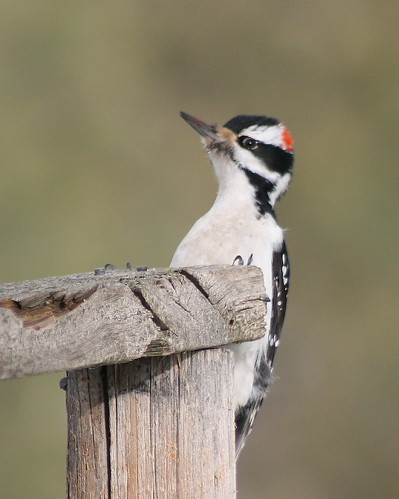
The male Hairy Woodpecker, as you can see, is quite a bit larger and both of these shots allow for the comparison of the bill size as well. While the downy was shy about being photographed this guy was not the least bit ashamed. Here are a couple more fun shots of him. It looks as if he was eating on red berries before he showed up to “tell me off.”

and.. this shot comes to you for a good reason also. If your really interested in one of the primary differences between the two it’s that shoulder line or the black line that runs across his breast, often referred to as “a comma,” the downy does not have those dark lines. (It looks like this guys beak is split but it’s not upon closer examination is the red berry juice on his beak that makes it appear that way.)

So in summary, if it’s rather large, has that shoulder line and a long beak it’s a Hairy. If it’s as small as a sparrow with no shoulder line it’s a Downy.
Enviromentalist Note: It’s become suspect that Hairy Woodpeckers are birds that are being deeply effected by threatened habitats and the disappearing of old growth forest. If you see any Hairies in your area it’s suggested that you post a note to one of your local birdwatching groups so that today’s orthonologist can offer up the condition of this species. You can also report sighting on Feederwatch.
Filed under: Bird Watching, Local Birds, Local Wildlife, Pacific Northwest, The Environment | 6 Comments
Tags: Bird Watching, Birds, Columbia River, Downy Woodpecker, Environment, Hairy Woodpecker, Kettle Falls, Kettle Falls Washington, Orient Washington, Pacific Northwest, Picoides pubescens, Picoides villosus
It all began with a comment….
…from an unsuspecting Oregonian. The comment is the only way I can explain my long absence. Years ago my sister lived in Oregon and we used to kind of pick on Oregon a bit. We giggled about what the anchors on television looked like and found they looked so similar in Seattle. We laughed that people actually talked to you in the elevator. The transition was a bit mind blowing. One day we were talking about swimming at an eastern Washington lake when the Oregonian in the room said, “You have lakes where you used to live?” It was a sincere question. I piped up with “oh sure you can drive from Spokane (a town people usually know) for ten minutes in any direction and hit a lake.” They looked shocked and were surprised that Spokane had a river. Their image of Eastern Washington was nothing but sand and tumbleweeds. Me and my sister could not stop laughing. Could they possibly be serious? They were……
When I began this blog it was with one intention. To catalogue an area where the last real scientist came on the land in 1942. No lie.
I’ve got mountains filled with ripe huckleberries right now (which sell for forty dollars a pound) and databases that insist they do not exist. Hundreds of wildflowers – which scientific databases have never cataloged in my county. We aren’t the Rocky mountains (we are just part of their ecosystem) we aren’t the boreal forest (even though we share hundreds of their species) we aren’t the Washington scab-lands that get airplay on Nova and the films like “Planet Earth” – we are the humble little mountain range in the middle of nowhere. Fundamentally this area is a place that no one ever sees. There is good news. One it does not draw the tourists that other areas do which can be a positive thing; for example check out the “lake o’ plastic bottles” drifting off the Florida keys. Maybe sometimes not being the perfect place to travel is a good thing. We are not having the real estate influx that Montana is experiencing. Things change here but very slowly and with the seasons. Well, almost everything is slow – but one thing is going fast. Our natural resources in this area are being sold off to the highest bidder at a speed that you would not believe.
My goal was not intended to create tourism. I could careless about people visiting (unless they really want too) instead I wanted to find answers and where I found them shocked me.
I found them here; E-Flora BC (that’s British Columbia) oh yeah, and on a website written by a man living deep in the Rocky Mountains, I found that in order to understand the species I was discovering on this mountain and in my backyard I had to read the web page of another man living in of all places California. And then… even more shocking New York – a man who I can almost draw one line across the map of the USA and we connect by points but he’s east and I’m west. If I attempted to look at sites in Washington all was lost – I found that this spot was a spot where all the ecosystems collide. The boreal forest, the montane forest and the scab lands of Washington ….. so I seemed to share some (if not all) species of with all of them. And how can that be? And why? This became the biggest unanswered question of them all.
This was not to justify my spot in the universe – I knew I had found my paradise for me. I could have chosen to live anywhere in the world (no lie) and chose this spot. Instead I suddenly got this crazy feel like I was like Lewis and Clark, investigating, looking and writing down all that they heard and saw so that one day some scientist can say, “hey there is a known photograph of the blanket flower in the little known eastern Washington Columbia mountain range.”
Before it was all gone. Because we are little known we do not (I repeat) do not have the same conservation laws as other well known mountain ranges. We were going to suffer I believe the same fate as the Appalachian mountain ranges. They will mine us, log us and destroy us before anyone even cared to look. That bothered me a lot… If any botanical scientist wants a good cause I believe that cause is here because again I mention the last real scientist that was here was here in 1942. How crazy is that?
I’ve watched the Bush administration sell off huge tracts of lands in an area that was deemed “roadless” by the Clinton administration. Millions of acres of this land is owned by a local logging operation – but they don’t log the land they buy. Nope. They log this federal forest because all it costs them is the money to make the road. They don’t clean up and I’ve watch mountain sides collapse as a result …. and they really are destroying this forest. The companies (like Boise Cascade) are “holding” the forest land they did buy for the day Congress wakes up and actually protects this area. Much of the forest is state owned and we are the first area that the Washington sells logging rights too. You’ll wander up these mountain roads to a completely logged off and horrific sight only to find you just wandered on state land. I think because if it happened in the Cascade range people would be screaming. But there is a quietness here – in the people and in the land.
So we just watch it all happen. Water dams where the power is sent to California because the businessman can get a better price and so, for electricity so we burn wood. In direct (no lie and literally) competition with China so I’ve watched our electric bills rise 130% every year in the last five years. Even when I live less then 31 miles away from the Grand Coulee Dam one of the largest dams in America. You’d think it would be cheap – it’s not – we don’t get the power. We gain all the problems that the dam offers without any benefit whatsoever. If you take the tour – they tell us that is exactly how we benefit; tourism. My unsoliciated opinion? I think if the salmon were still running we’d see more tourism from that.
The environmental issues in this area is so wrapped up in bureaucracy and red tape that it has become impossible to unravel them. I never thought for a second I could do that however, I thought at the very least I could record all of this because it is all going away with amazing speed.
Blogging got me off track though. It became a social network where I found myself bragging a bit and feeling like somehow I was justifying my place on this planet. It stopped being about the odd shaped flowers off my back porch and more about if someone liked me. The problem was in this process I stopped liking myself. I took less photographs so I could “talk” more and to be honest I got tired of the sound of my voice. So what am I doing now?
I rebuilt my blog. My new blog (the one I will spend huge amounts of time cataloging that area that I live) here: Lori Aull’s Images of the Colville National Forest My old blog will probably die from being busy with the new blog and donating photographs that I take to this website; E-Flora BC It’s a British Columbia website designed to catalog their wildflowers. Some of my submission have already been accepted into their database and I expect in time more will also be accepted. Overtime I intend to offer up my pictures to Washington state as well. In the end I decided that my goal was never to make a bunch of friends or even obsess wildy about how many stats I got in a week. Instead it was to let others in my area know what they are looking at. It was to put in one place an organized view of the various wildlife and plants in my area. If at any point my not so lofty goal led to a place where I took some pictures you all really appreciated then so much the better. Meanwhile, I’m spending a lot more time taking photographs and discovering new things everyday. I’m letting you know that I’m keeping busy, I’m doing well and if you don’t hear from me much don’t take it personal. I’m just focusing on my original goals.
My last point? The new blog really isn’t designed to take up any of your time. Your welcome to look but do not (honestly) feel pressured to commenting or anything of that nature. Come as you please take a look around but do not stress about validating my photographs. Utilize it for a learning tool (hopefully in that area it’s helpful) but don’t stress about wasting your time. The organization of it makes it kind of impossible to do because it really is just a place where I can post very large photographs about the species in this area. I make few comments about them except for location, information, and means of identification. It is little more than simple a place to offer research on the species in my area. I stopped talking about me and realized that going out everyday, taking photographs and cataloguing them is actually about ninety percent of my life so there really is nothing left to say.
….And wow, to think it all began with an offhanded comment.
May your life be peaceful & healthy,
Lori Aull
p.s. Thanks for your friendship and trust me in order to do research on the many species I find everyday I’ll still have to access the areas I know I need to learn. (Some of those blogs are mentioned above but does not cover all of them by a long shot.) So I’ll be commenting on your blogs on occasion but a lot less then I did in the past. And please, if I do – don’t feel like you need to comment on the new blog in response. It really is just designed to offer a place to research for people like me who just wanted to know the answer to, “what the heck is that?” peace.
Filed under: Pacific Northwest, Photograhy, The Environment, Uncategorized | 8 Comments
slight pause
hopefully no one is offended… recently i got tendinitis of the right elbow which has caused a lag in my writing. (The primary goal of letting you know I’m fine things are good I’m just having a difficulty in typing.)
Blessings to you and yours.
p.s. I have a lot of photos… I’ll just have to catch up later….
Filed under: Uncategorized | 13 Comments


 Random Musings